

Wealth
AI Scams: How to Protect Your Money
The scam landscape uses AI voice clones, deepfakes, and automated phishing. Learn the family verification protocol and rules to protect your wealth and elders from digital scams.
The investment that outperforms most professional money managers—and takes zero expertise to use.
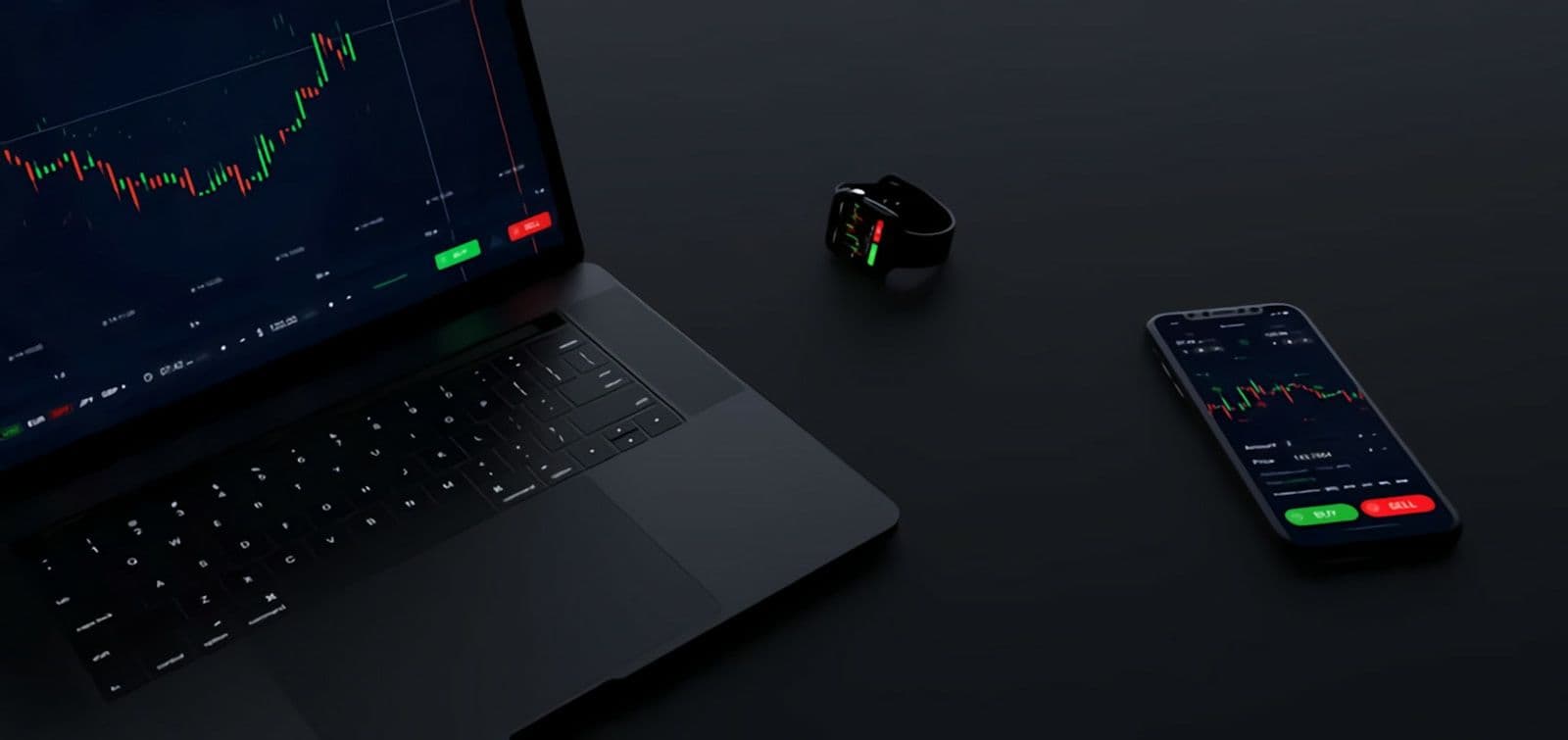

An index fund is a type of investment that tracks a market index—a list of stocks that represents part of the market.
The most famous example: the S&P 500 index tracks 500 of the largest US companies. An S&P 500 index fund owns tiny pieces of all 500 companies.
Instead of trying to pick winners, you own a piece of the whole market. When the market goes up, you go up. Simple.
Key takeaway
Index funds track whole markets, giving you diversification automatically.

Over any 15-year period, approximately 90% of professional fund managers fail to beat their benchmark index.
They charge high fees for this underperformance. Index funds charge minimal fees because they don't pay for expensive research teams and analysts.
Low fees + market returns = better results than most "experts" achieve.
You're not trying to beat the market. You're trying to own the market's returns. And that's almost always enough.
Key takeaway
90% of pros underperform indexes. Low fees + market returns = winning strategy.
Most of us are trained to be "Employees." We trade our hours for dollars. This is a "Linear Wealth" model—to earn more, you must work more hours or increase your per-hour value. The fatal flaw is that you have a finite amount of time and energy. You are a "Depreciating Asset" in the labor market.
Investing is the transition from "Linear Wealth" to "Exponential Wealth." It is the process of becoming an "Owner." When you invest, you are "Hiring" your dollars to work for you. Unlike humans, dollars never sleep, never get sick, and never ask for a raise. They work 24/7/365 to produce "Yield."
Neurologically, the shift to investing requires overriding the "Loss Aversion" bias—the biological urge to keep your money "Safe" in a cupboard or a bank account. But in an inflationary world, "Safe" is a guaranteed loss of purchasing power. The only true safety is "Productive Ownership." In this module, we dismantle the myths of the market and provide the foundational logic of professional investing.
To build a portfolio that grows while you sleep, we utilize the A.S.S.E.T. Framework.
1. Allocate to Risk (The Asset Mix)
Determine your "Risk Tolerance" based on your time horizon. If you are 30 years away from freedom, you should prioritize "Equities" (Stocks). If you are 5 years away, you should prioritize "Stability" (Bonds/Cash). You are building the "Vessel" for your wealth.
2. Select Low-Cost Indices (The Efficiency Principle)
Stop trying to pick the "Winning Stock." 90% of professional hedge fund managers fail to beat the market average over 10 years. Instead, buy the "Whole Market" using low-cost Index Funds or ETFs. You are "Capturing the Growth of Everything" rather than gambling on the "Success of One."
3. Set it to Auto-Pilot (The Dollar-Cost Averaging)
Do not try to "Time the Market." Institutional algorithms will win that game 100% of the time. Instead, invest a fixed amount every single month, regardless of whether the market is up or down. You are buying more shares when they are cheap and fewer when they are expensive. This is "Mechanical Discipline."
4. Eliminate Fees and Taxes (The Margin Protection)
Investment fees (like a 1% management fee) can cannibalize 30-50% of your total wealth over 30 years. Use tax-advantaged accounts (like 401k, IRA, or ISA) and low-fee providers. You are "Plugging the Leaks" in your wealth engine.
5. Trust the Compounding (The Patience Protocol)
The first decade of investing is boring. The second decade is interesting. The third decade is "Explosive." Successful investing is 1% action and 99% waiting. You are moveing from "Trying to win the day" to "Ensuring you win the decade."
When the market drops 10%, most people see "Loss" and feel panic. A master investor sees "Discount" and feels opportunity.
Volatility (price movement) is NOT the same as Risk (permanent loss of capital). If you own the entire market through an index fund, the only way you experience permanent loss is if the entire world economy collapses to zero—in which case, your bank account wouldn't have saved you anyway. By re-framing volatility as a "Normal Breathing Pattern" of the economy, you remove the emotional stress of investing. You are no longer a "Victim" of the market; you are a "Participant" in human progress.
Follow these three steps to become an investor this afternoon.
Step 1: The "Entry Account" Opening
Open a Brokerage Account with a reputable low-cost provider (e.g., Vanguard, Fidelity, Schwab). Ensure it is a "Tax-Advantaged" account if eligible.
Step 2: The "Core Index" Selection
Pick a "Total World Stock Market" or "S&P 500" index fund. This is the "Foundation" of 90% of successful portfolios.
Step 3: The "Forever" Transfer
Set an automatic monthly transfer for the amount you identified in your "Simple Financial System" (Article 52). You are now an "Owner" by default.
To understand your "Investment Readiness," answer these questions:
Naming your "Inherited Fears" is the first step in replacing them with "Rational Facts." You are shifting from "Working for Dollars" to "Commanding Capital."
A month-long journey to transition from "Saver" to "Capitalist."
Week 1: The Infrastructure Setup
Week 2: The Logic Lock
Week 3: The First Purchase
Week 4: The Automation finalization
Wealth is not a prize for being lucky; it is a reward for being patient and disciplined. By the end of this month, you will find that the market is no longer a source of stress—it is the system you have finally mastered.
An index fund is a type of mutual fund or exchange-traded fund (ETF) designed to track the performance of a specific market index, like the S&P 500, offering broad market exposure and low operating expenses.
Experts recommend index funds because they offer instant diversification, lower fees, and historically outperform actively managed funds and individual stock picking over the long term.
About the author

Personal Finance Writer & Business Professional
Keep reading
The scam landscape uses AI voice clones, deepfakes, and automated phishing. Learn the family verification protocol and rules to protect your wealth and elders from digital scams.
Asset allocation drives over 90% of your portfolio's long-term returns. Learn how to allocate among equities, debt, gold, and cash, rebalance your assets annually, and avoid chasing last year's winners.
Bear markets are inevitable, but selling at the bottom is the main engine of the behavior gap. Learn loss aversion psychology, write a pre-commitment letter, and discover what to do during a drawdown.